185. John 20:24–29 – Faith Is Not Afraid of Facts
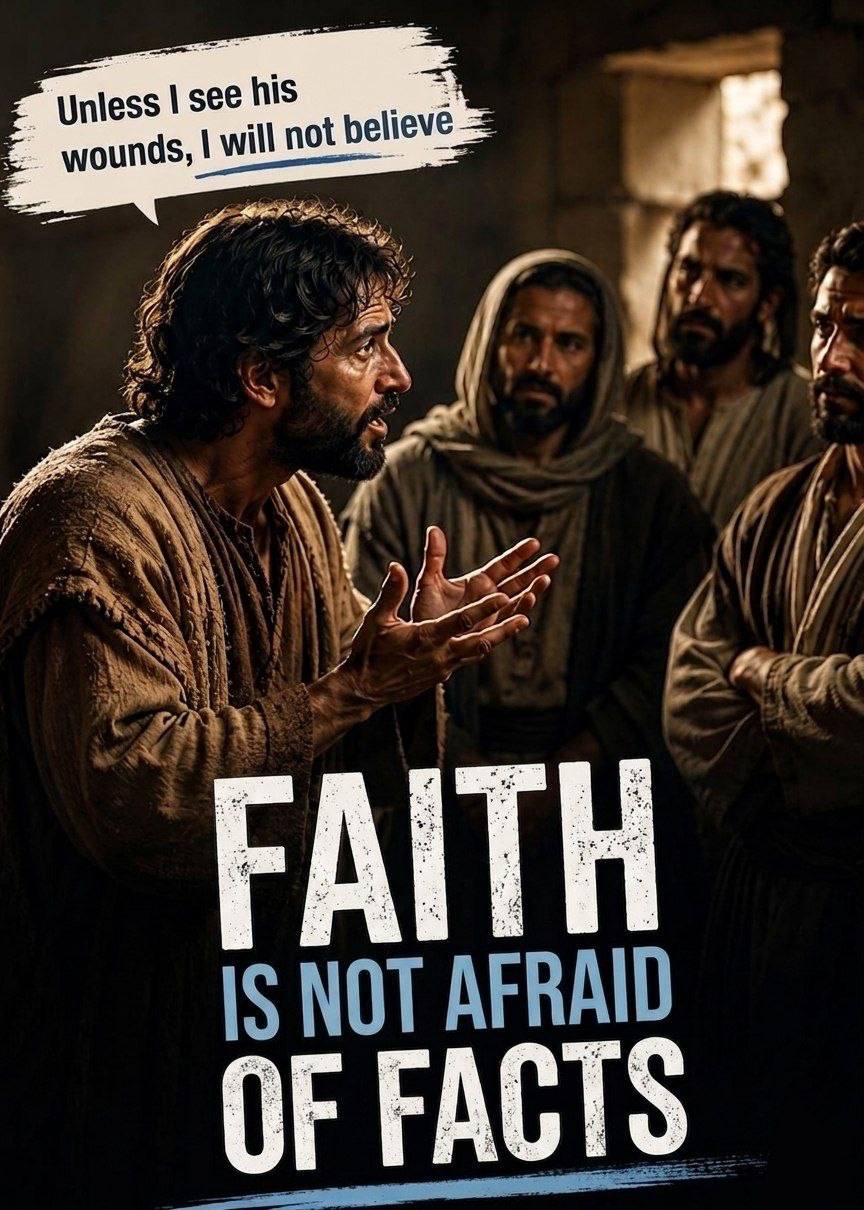
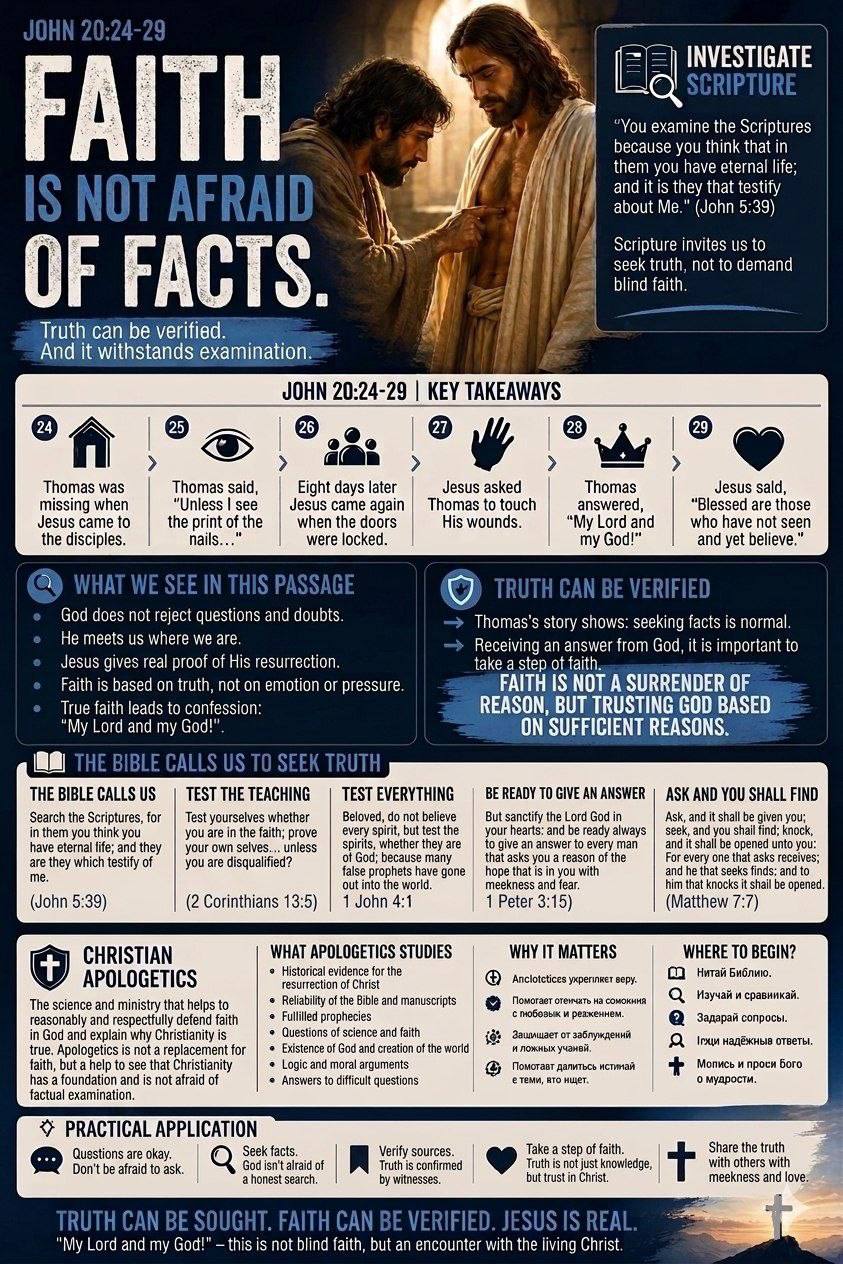
Faith Is Not Afraid of Facts
John 20:24–29
📖 Biblical Text
24 Now Thomas, one of the Twelve, called the Twin, was not with them when Jesus came.
25 So the other disciples told him, “We have seen the Lord.” But he said to them, “Unless I see the mark of the nails in His hands, and put my finger into the mark of the nails, and place my hand into His side, I will never believe.”
26 Eight days later, His disciples were inside again, and Thomas was with them. Although the doors were locked, Jesus came and stood among them and said, “Peace be with you.”
27 Then He said to Thomas, “Put your finger here, and see My hands; put out your hand, and place it in My side. Do not disbelieve, but believe.”
28 Thomas answered Him, “My Lord and my God!”
29 Jesus said to him, “Have you believed because you have seen Me? Blessed are those who have not seen and yet have believed.”
🔎 Seeking Truth Is Not a Sin
Thomas is often remembered as “Doubting Thomas,” but in this passage we see a man who wanted to be certain of the truth. He was not looking for an argument—he wanted to know whether Christ had truly risen from the dead.
“Unless I see… I will never believe.”
Thomas did not want to build his faith solely on the testimony of others. He wanted to examine the facts for himself.
✝️ Christ Did Not Reject Questions
Eight days later, Jesus returned and offered Thomas exactly what he had asked for. The Lord did not condemn his sincere search for truth.
God is not afraid of questions. The real danger begins when a person refuses to accept the truth even after receiving an answer.
🧠 Faith Is Grounded in Facts
Christianity is rooted in real historical events:
the life of Jesus Christ;
His death on the cross;
the empty tomb;
eyewitness testimony;
fulfilled prophecies.
After receiving the evidence, Thomas declared:
“My Lord and my God!”
The facts strengthened his faith.
📚 Search the Scriptures
Jesus said:
“Search the Scriptures… they testify about Me.”
— John 5:39
The Bible does not call people to blind faith. Instead, it encourages them to seek truth:
“Examine yourselves, to see whether you are in the faith.”
— 2 Corinthians 13:5
“Do not believe every spirit, but test the spirits.”
— 1 John 4:1
“Seek, and you will find.”
— Matthew 7:7
🛡️ Christian Apologetics
The word “apologetics” comes from the Greek word ἀπολογία (apologia), meaning “defense,” “reasoned answer,” or “a case made in support of a position.”
Apologetics helps Christians explain and defend their faith in a thoughtful and reasonable way.
Its key verse is:
“Always be prepared to make a defense to anyone who asks you for a reason for the hope that is in you.”
— 1 Peter 3:15
The word “defense” in this verse is directly related to ἀπολογία—a reasoned defense of one’s beliefs.
Apologetics explores evidence for Christ’s resurrection, the reliability of the Bible, fulfilled prophecy, the relationship between science and faith, and answers to common objections against Christianity.
It does not replace faith; it demonstrates that faith has a solid foundation and is not afraid of examination.
🔥 Faith and Reason
Biblical faith does not require people to stop thinking. Christians are free to investigate, ask questions, and examine evidence.
Thomas’s story shows that an honest search for truth can lead a person not away from God, but to God.
❤️ From Facts to Worship
When Thomas saw the risen Christ, he declared:
“My Lord and my God!”
The goal of seeking truth is not merely to gain knowledge, but to encounter the living Christ.
🕊️ Practical Applications
Do not be afraid of honest questions.
Study the Scriptures for yourself.
Learn the foundations of your faith.
Be prepared to explain the hope you have.
Remember: truth withstands examination.
Faith is not afraid of facts. Truth can be sought. Faith can be tested. Jesus is real.