112. John 11:45-48 – Why God Does Not Give 100% Proof of Himself
Why God Does Not Give 100% Proof of Himself
 Gospel of John 11:45–48
Biblical Text
45 Then many of the Jews who had come to Mary and had seen what Jesus did believed in Him.
46 But some of them went to the Pharisees and told them what Jesus had done.
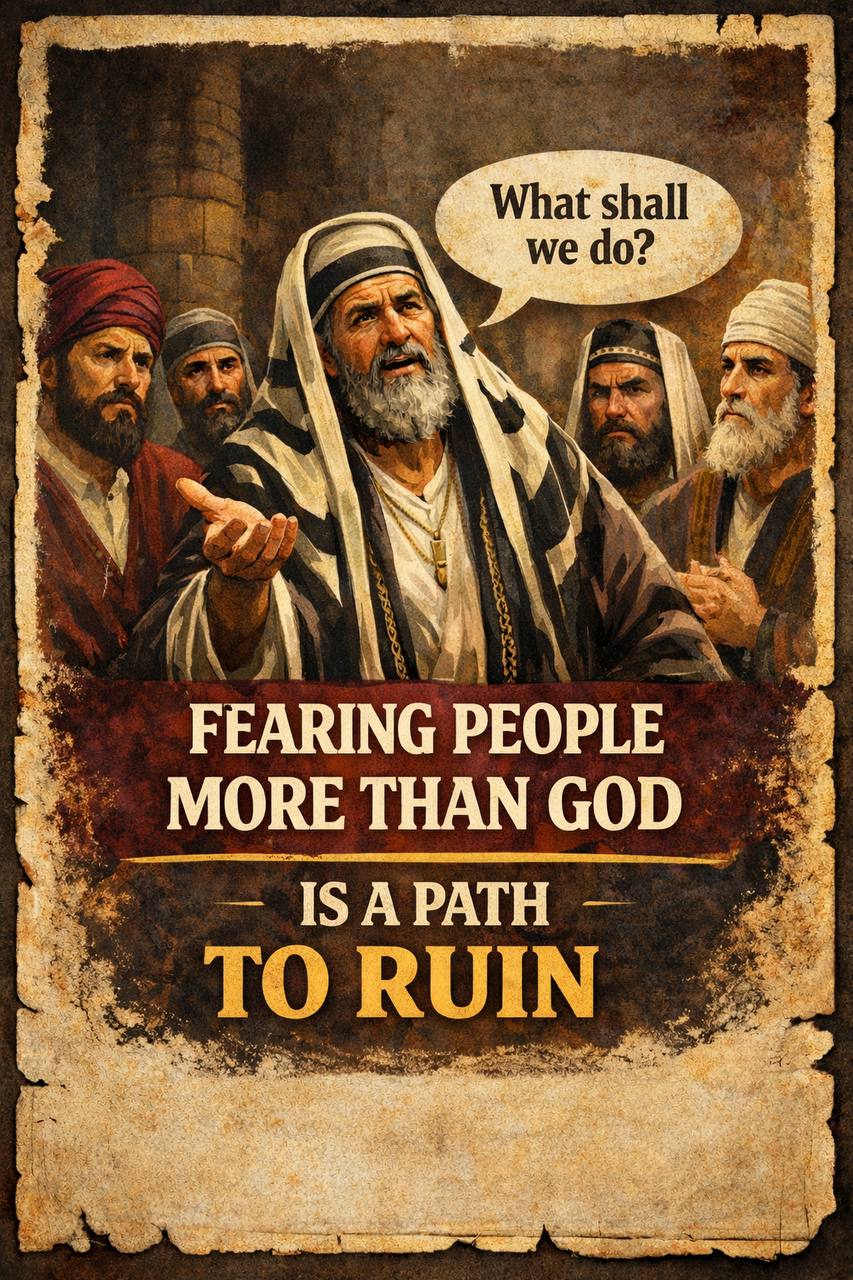
47 So the chief priests and the Pharisees gathered the council and said, “What are we to do? For this man performs many signs.”
48 “If we let Him go on like this, everyone will believe in Him, and the Romans will come and take away both our place and our nation.”
 Two Responses to the Same Miracle
The resurrection of Lazarus was one of the most public and undeniable miracles in Jesus’ ministry. It could not be refuted: there was a known dead man, many witnesses, and a visible result. That is why the reaction of the people was divided not along the line of “belief versus unbelief,” but along the line of the heart.
Some saw the miracle and believed. Others carried the information to the Pharisees—not to seek truth, but to report a fact to those in power. For them, the miracle did not lead to faith; it became a problem that needed to be dealt with.
 An Acknowledged Miracle, a Rejected Truth
When the chief priests and Pharisees gathered the council, they did not deny the miracle. They openly admitted: “This man performs many signs.”
This is a crucial moment. The issue was not a lack of evidence. On the contrary, the evidence was overwhelming. Yet instead of repentance, a different question arose: “What are we to do?”
This was not a question about God’s will, but about preserving their own position.
 Fear of People Stronger Than Fear of God
What troubled the Pharisees was not truth or righteousness, but consequences. They feared that faith in Jesus would lead to Roman intervention, the loss of status, power, and control. Their fear was directed not toward God, but toward people; not toward divine judgment, but toward political and social loss.
Jesus did not threaten their lives—He threatened their system. He did not fit into a comfortable religious structure, could not be controlled, and exposed hypocrisy. Therefore, instead of coming to Him with questions, they sought a way to get rid of Him.
 Why God Does Not Give “100% Proof”
This passage reveals a fundamental principle: even 100% proof does not guarantee faith if the heart is unwilling to submit to the truth.
God had already provided sufficient evidence—through Jesus’ works, His words, His character, and His authority over death. The demand for “more proof” is often not a sincere search for truth, but an attempt to postpone obedience. In fact, constantly asking for more evidence devalues what God has already revealed.
John 11 clearly shows that even when God speaks plainly and powerfully, people can still choose fear, self-interest, and self-justification.
 Conclusion
We already have enough evidence that Jesus Christ is the Messiah. Faith, therefore, is not a matter of the amount of proof, but a matter of choice.
And today, each of us faces the same decision: to stand on the side of Christ—or on the side of the Pharisees, who knew the truth, yet chose to protect their influence and the approval of people.