114. John 11:53-57 – Sin During Holidays
Sin During Holidays
 John 11:53–57
Scripture Passage
53 So from that day on they made plans to put Him to death.
54 Therefore Jesus no longer walked openly among the Jews, but went from there to the region near the wilderness, to a town called Ephraim, and stayed there with the disciples.
55 Now the Passover of the Jews was near, and many went up from the country to Jerusalem before the Passover to purify themselves.
56 They were looking for Jesus and saying to one another as they stood in the temple, “What do you think? That He will not come to the feast at all?”
57 Now the chief priests and the Pharisees had given orders that if anyone knew where He was, he should report it, so that they might arrest Him.
 It is easy to notice that during holidays alcohol sales increase significantly. The number of domestic conflicts, fights, acts of violence, and other serious consequences also rises. In a relaxed, informal atmosphere, people more often allow themselves sins connected with sinful entertainment. Young people often avoid the presence of adults and spiritually mature individuals so that nothing interferes with their desire to “let loose.” Some young men manipulate girls during birthdays or holidays, trying to receive “as a gift” what, according to God’s design, belongs only within marriage. All of this is justified by a simple formula: “It’s a holiday—we need to relax; we already work so hard.” The conscience finds excuses to avoid repentance. Many sinful moments are kept hidden — “what happens in Las Vegas stays in Las Vegas” — while those who have long stopped listening to their conscience may even boast about their “adventures.”
 Sadly, this also happens during religious holidays. Even days such as Easter or Christmas can be used as occasions for sin. But the problem is not the holidays themselves. Holidays are merely catalysts. They amplify and reveal what already lives in a person’s heart.
 Those who truly love God use holidays differently. They see them as a time to be more present with God and God’s people, to serve, and to remain in fellowship with the church. Holidays become a pause from routine and busyness — an opportunity to go deeper into Scripture, to rethink one’s life, to give thanks for the past, to ask for God’s blessing on future plans, and to honestly evaluate one’s spiritual condition.
 What occupies a person’s heart becomes especially visible during holidays. If Christ has been only a guest in our lives and not the Master, we do not want Him to interfere with our pleasures — and we will try to push Him aside. But if Christ is the Master of our home and our life, He takes an honored place not only in formal church attendance, but also in every joyful and celebratory moment. Then holidays stop being dangerous points of spiritual decline and instead become moments of strengthening our relationship with God.
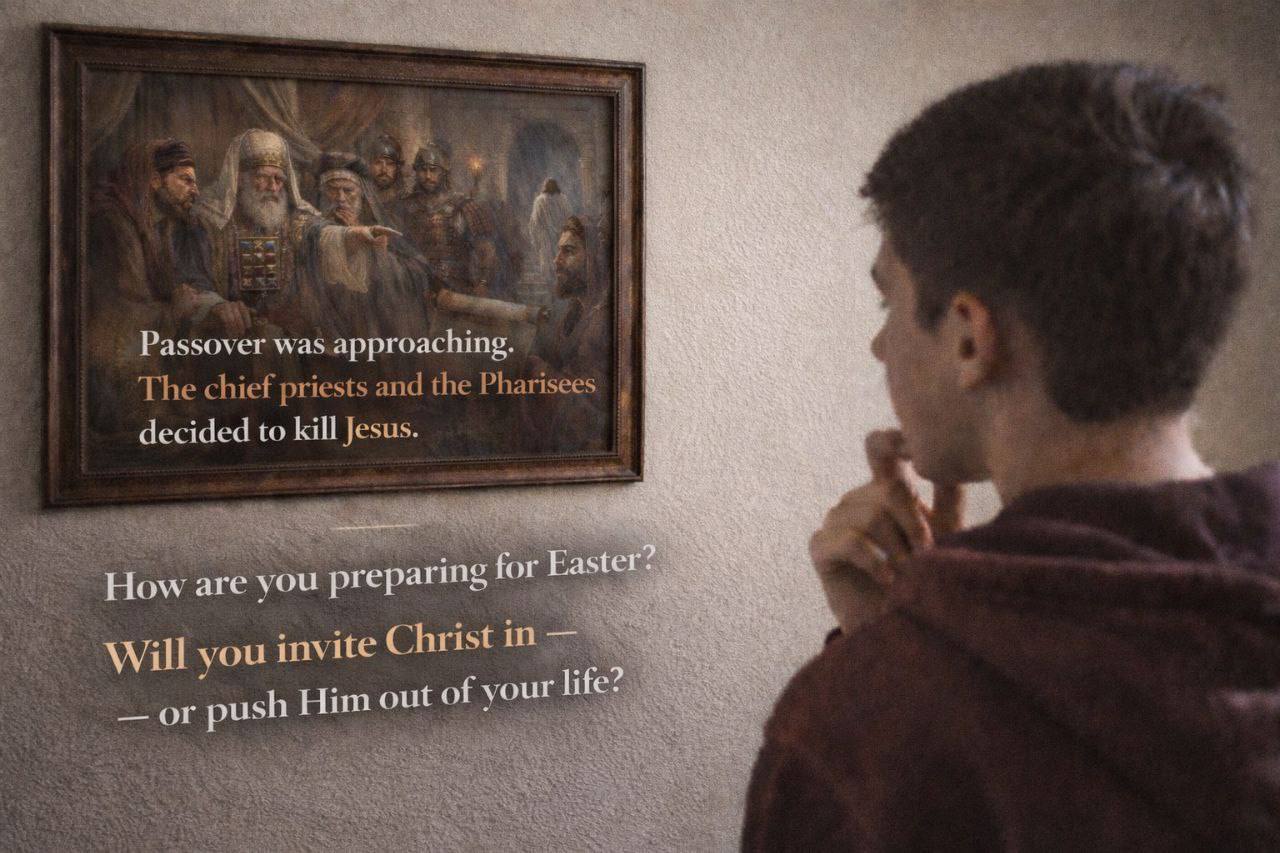
 A similar paradox can be seen in the time of Jesus. As Passover approached, the Jews carefully observed the rituals of purification, where every small detail mattered. At the same time, a decision was being made to kill the Son of God. This plan was not even regarded as sin; it was seen as a “necessary measure” to preserve religious power — a power that had become more important to them than God Himself.
 The apostle Paul wrote: “One person esteems one day as better than another, while another esteems all days alike. Each one should be fully convinced in his own mind” (Romans 14:6). Whether to celebrate certain days or not is a personal choice. What matters far more is that Jesus remains our Lord on every day — whether ordinary days or holidays.