130. John 13:21-27 – Jesus Points Out the Betrayer
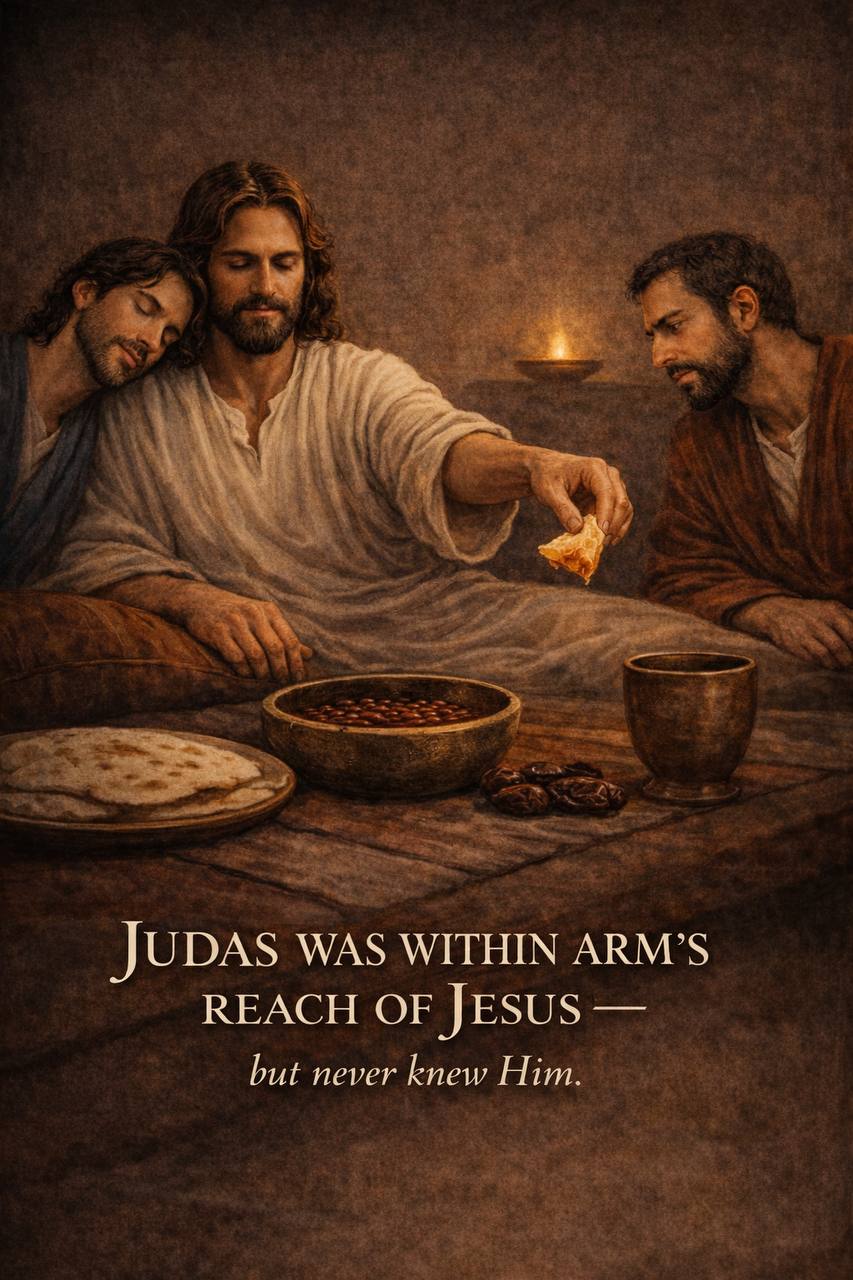
📖 Jesus Points Out the Betrayer
John 13:21–27
During the Last Supper one of the most dramatic moments in the Gospel occurs. Jesus tells the disciples that one of them will betray Him. Yet the way He reveals the betrayer shows a remarkable combination of truth, love, and mercy.
📜 Biblical Text (John 13:21–27)
21 After saying these things, Jesus was troubled in spirit and testified, “Truly, truly, I say to you, one of you will betray Me.”
22 The disciples looked at one another, uncertain of whom He spoke.
23 One of His disciples, whom Jesus loved, was reclining close to Jesus.
24 Simon Peter motioned to him to ask Jesus of whom He was speaking.
25 So leaning back against Jesus, he said to Him, “Lord, who is it?”
26 Jesus answered, “It is he to whom I will give this piece of bread when I have dipped it.” So when He had dipped the bread, He gave it to Judas, the son of Simon Iscariot.
27 Then after he had taken the piece of bread, Satan entered into him. Jesus said to him, “What you are going to do, do quickly.”
⚠️ Another chance is given to Judas to turn away
Jesus already knows about the betrayal, yet He does not expose Judas publicly. The piece of bread He gives him is not an accusation but a quiet opportunity to stop. Judas could have understood: “He knows.” But his heart had already made its decision. A person can ignore the voice of conscience for so long that it nearly stops being heard.
🤝 Jesus does not turn the other disciples against Judas
Jesus does not announce aloud, “Judas is the betrayer.” If He had done so, the disciples might have reacted with anger or tried to stop Judas by force. Instead, the answer is given quietly to John. The others do not understand what is happening. Christ does not humiliate a person before others, even when He knows their sin.
❤️ Love and care even for the betrayer
Earlier that evening Jesus washed the disciples’ feet—and Judas was among them. Offering a piece of bread to a guest at an Eastern meal was a sign of honor and friendship. Christ serves Judas, feeds him, and allows him to remain at the table. The love of Jesus is shown even to the one preparing to betray Him.
📍 John on the right, Judas on the left
At festive meals people reclined on their left side. The disciple on the right side of the host could lean close to the teacher’s chest, just as John did. The most likely arrangement is John on Jesus’ right and Judas on His left. A similar picture appears at the cross: Jesus is crucified between two criminals—one rejects Him, the other believes. Next to Christ there are always two responses: to follow Him or to reject Him.
🍞 Bread as a symbol of Christ—the bread of life
The gesture of giving bread is significant. Earlier Jesus said, “I am the bread of life.” Bread represents life, nourishment, and God’s grace. Yet here a tragic paradox appears: Judas receives bread from Jesus’ hand but does not accept Christ as the source of life.
🧭 Judas ignores the love of God
Judas saw miracles, heard Jesus’ teaching, lived alongside Him, and sat with Him at the same table. But physical closeness to Jesus does not mean spiritual closeness. Judas ignores the warnings and signs of love and chooses his own path.
✨ The main lesson
It is possible to be very close to the truth and still reject it. Judas was near: he listened to Jesus, served alongside the disciples, and sat within arm’s reach of Him. Yet his heart was far away. The question of this story speaks to every person: who will we be beside Jesus—a disciple who follows Him or someone who turns away?