164. John 18:10-11 – Peter’s Sword
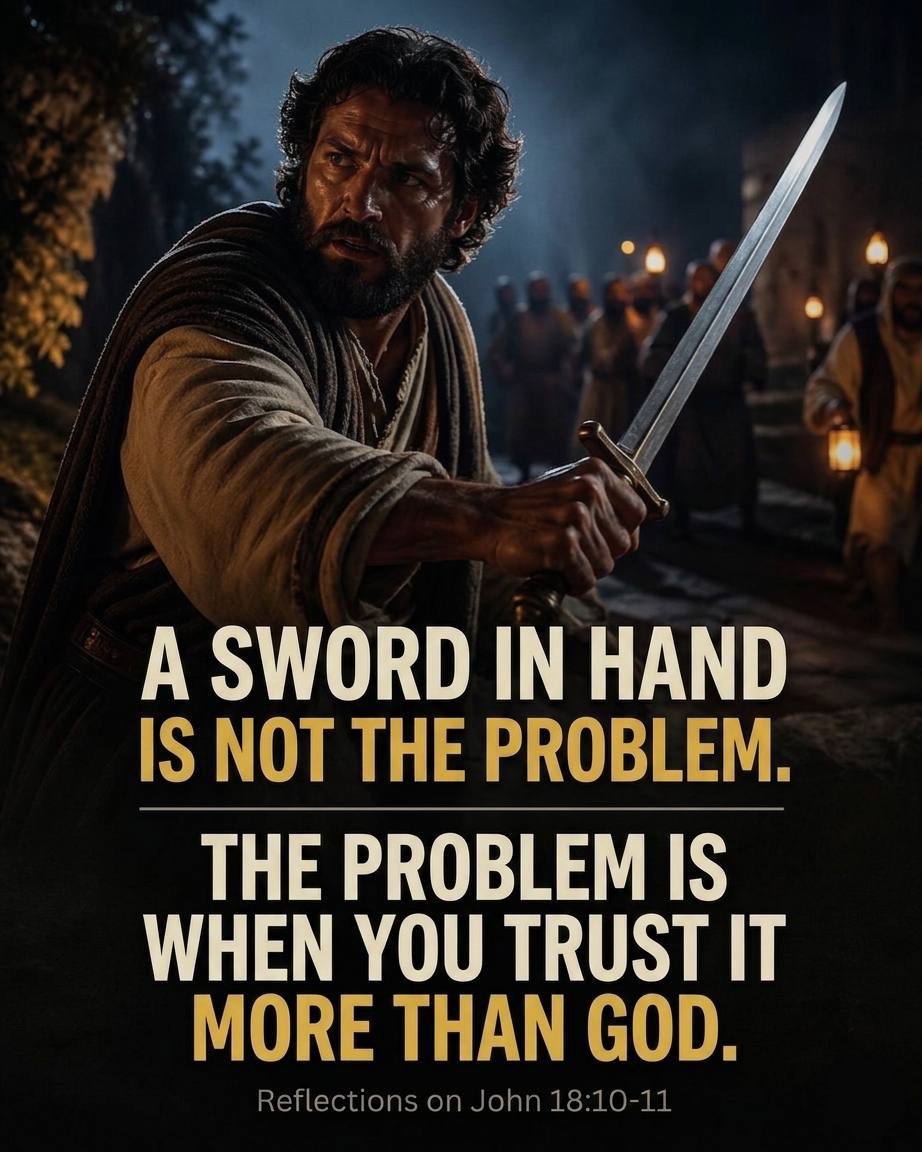
📖 Peter’s Sword
John 18:10–11
⸻
📜 Biblical Text
10 Then Simon Peter, having a sword, drew it and struck the high priest’s servant and cut off his right ear. The servant’s name was Malchus.
11 So Jesus said to Peter, “Put your sword into its sheath; shall I not drink the cup which the Father has given Me?”
⸻
⚔️ What kind of sword was it?
The text uses the Greek word μάχαιρα (machaira) — a general term for a sword or knife. To understand the context better, it helps to look at different types of swords from that time and their biblical connections.
⚔️ Machaira — a personal sword
📖 Luke 22:36–38
📖 John 18:10
a short sword or large knife
about 30–60 cm in length
carried personally
used for daily tasks and self-defense
👉 This is most likely the type of sword Peter had.
⸻
🛡️ Gladius — a Roman soldier’s sword
📖 Romans 13:4
standard weapon of the Roman army
symbol of authority and punishment
used in formation combat
👉 Not named directly in the text, but the “sword of authority” fits this type.
⸻
🗡️ Sica — a concealed dagger
📖 Acts 21:38
short and curved
easily hidden
used for sudden attacks
👉 Not explicitly named, but connected to historical groups like the Sicarii.
⸻
⚔️ Rhomphaia — a sword of judgment
📖 Revelation 1:16
long and powerful
often symbolic
represents judgment and divine authority
⸻
💡 Conclusion:
Peter was not holding a military weapon, but a personal sword.
However, the issue in the passage is not the type of sword.
⸻
🎯 The Main Focus
The main idea of John 18:10–11 is not about weapons, but about God’s will and control.
Peter:
acts impulsively
tries to defend Jesus
takes control of the situation
Jesus:
is fully in control
willingly goes to the cross
accepts the “cup” from the Father
👉 Christ is not a victim of circumstances.
He chooses to lay down His life.
⸻
⚖️ On Pacifism
The idea of not using the sword appears explicitly only in
Matthew 26:52:
“All who take the sword will perish by the sword.”
But even there:
it is not the main focus
it is an additional principle
👉 In John, the emphasis is different:
do not interfere with what God has already decided to accomplish
⸻
📖 Principle of Bible Study
An important takeaway:
❗ Do not build doctrine on secondary details
If we focus only on:
“Is weapon use allowed?”
we:
miss the main message
shift the emphasis away from the text
💡 The right approach:
first understand the main idea, then explore secondary issues.
⸻
🍷 Themes of the Last Supper
The Last Supper provides the context for this moment. Key themes include:
Difficult times ahead — danger and pressure are coming (the mention of swords is indirect and positive, pointing to readiness, not violence)
Care for one another — washing of feet, command to love
Betrayal — Judas
Testing of faith — warning to Peter
Readiness for suffering — the path of Christ
Promise of the Holy Spirit — comfort and help
Acceptance of God’s will — the central theme
👉 There is no primary focus here on teaching pacifism.
⸻
🧩 Conclusion
This text is not against weapons,
but against going against the will of God.
Peter’s problem was not the sword, but that:
he acted without understanding God’s plan
he tried to control the situation
he interfered with what Christ had already accepted
⸻
🔥 Final Thought
A sword in your hand is not the problem.
The problem is when you trust it more than you trust God.