102.John 10:11-13-The Shepherd vs the Hired Hand
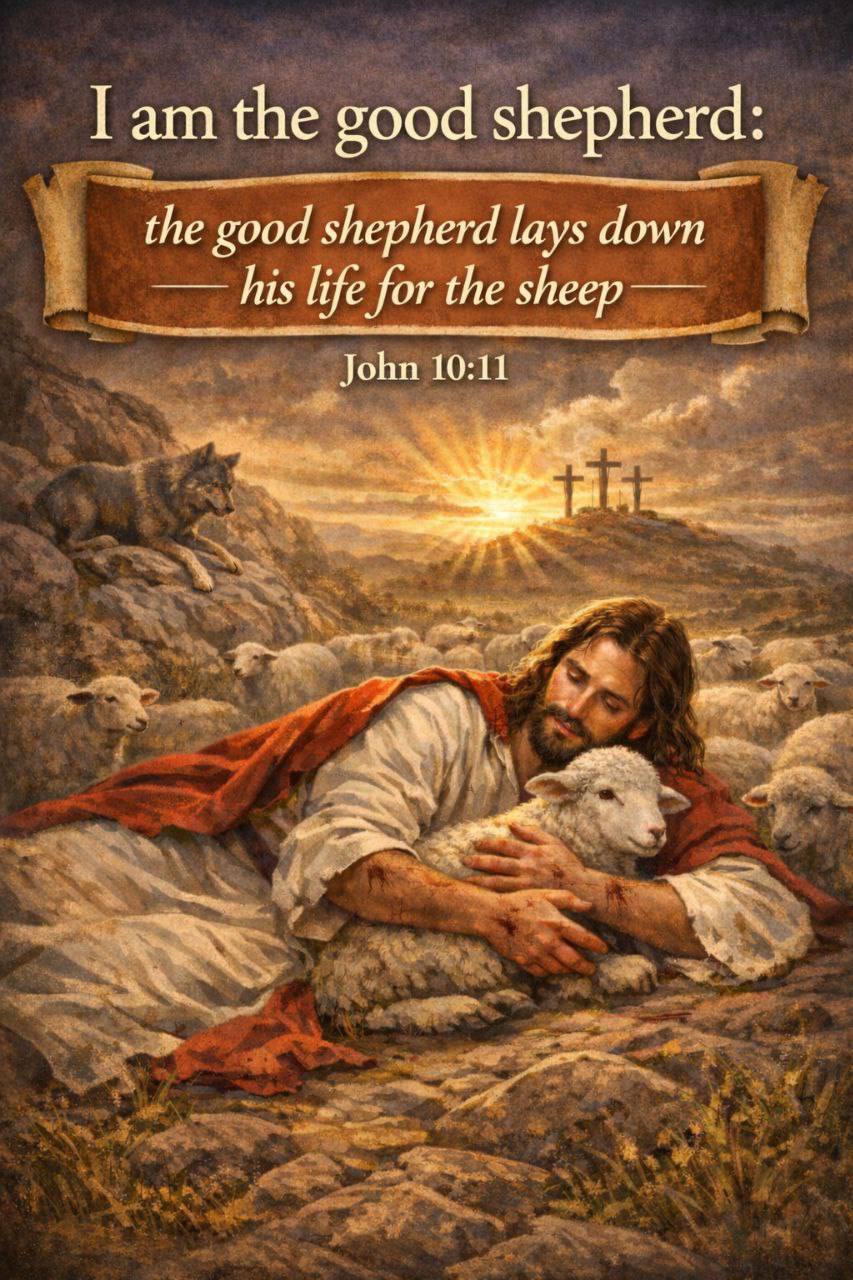
John 10:11–13
The Shepherd vs the Hired Hand
Biblical Passage
11 “I am the good shepherd. The good shepherd lays down his life for the sheep.”
12 “The hired hand, who is not the shepherd and does not own the sheep, sees the wolf coming and leaves the sheep and runs away. Then the wolf attacks the flock and scatters it.”
13 “The man runs away because he is a hired hand and cares nothing for the sheep.”
 The Context of Jesus’ Words
In Jesus’ time, hired shepherds were common. They were employed seasonally, paid for their work, and often had no deep personal bond with the flock. Because of this, Jesus’ illustration was immediately understandable to His listeners. The radical part of His words is not the criticism of the hired hand, but how Jesus defines Himself.
 The Hired Hand — Not a Villain, but a Person of the System
Jesus does not portray the hired hand as evil or cruel. The problem is not character, but a model of responsibility.
The hired hand works within a contract. He does his job as long as it is safe. When the cost becomes too high, he leaves—and from the system’s perspective, that decision makes sense. He does not hate the sheep. They are simply not his.
 The Shepherd — A Person of Belonging
The shepherd is connected to the sheep not by contract, but by relationship. The sheep are his. That is why he stays when danger comes.
The phrase “lays down his life” does not mean dying foolishly. It means being willing to stand between the wolf and the flock, to remain when leaving is an option, and to risk everything for those entrusted to him.
 The Wolf as the Moment of Truth
As long as there is no wolf, the hired hand and the shepherd look the same. The difference appears only in crisis.
Danger reveals who is there by contract, and who is there by love.
 Shepherds in a Time of War
During the war, hundreds of pastors have left Ukraine. The reasons are understandable: it is dangerous to stay, there are opportunities to leave, and in other countries there is safety, stability, and better living conditions.
But there are others.
There are those who did not weigh where life would be easier or economically better, who did not look for comfort or convenience, but stayed with their church — with their people, with their sheep.
They stayed not because they failed to see the danger, but because they saw responsibility. Not because there was no way out, but because they could not leave.
In times of peace, it is hard to tell the hired hand from the shepherd. War reveals it instantly.
 The Christological Meaning
Jesus is not merely an example of a better shepherd. He does what no one is required to do.
“No one takes my life from me, but I lay it down of my own accord” (John 10:18).
He was not “devoured by wolves.” He entered the darkness itself to defeat the enemy from within— and He rose again.
 Final Conclusion
The hired hand is not a villain. He is simply a person of the system. The shepherd is the one who steps beyond the system for the sake of love.
Jesus shows that salvation does not come from those who merely follow instructions, but from the One who stays when leaving is an option.