103.John 10:14-18-One Shepherd
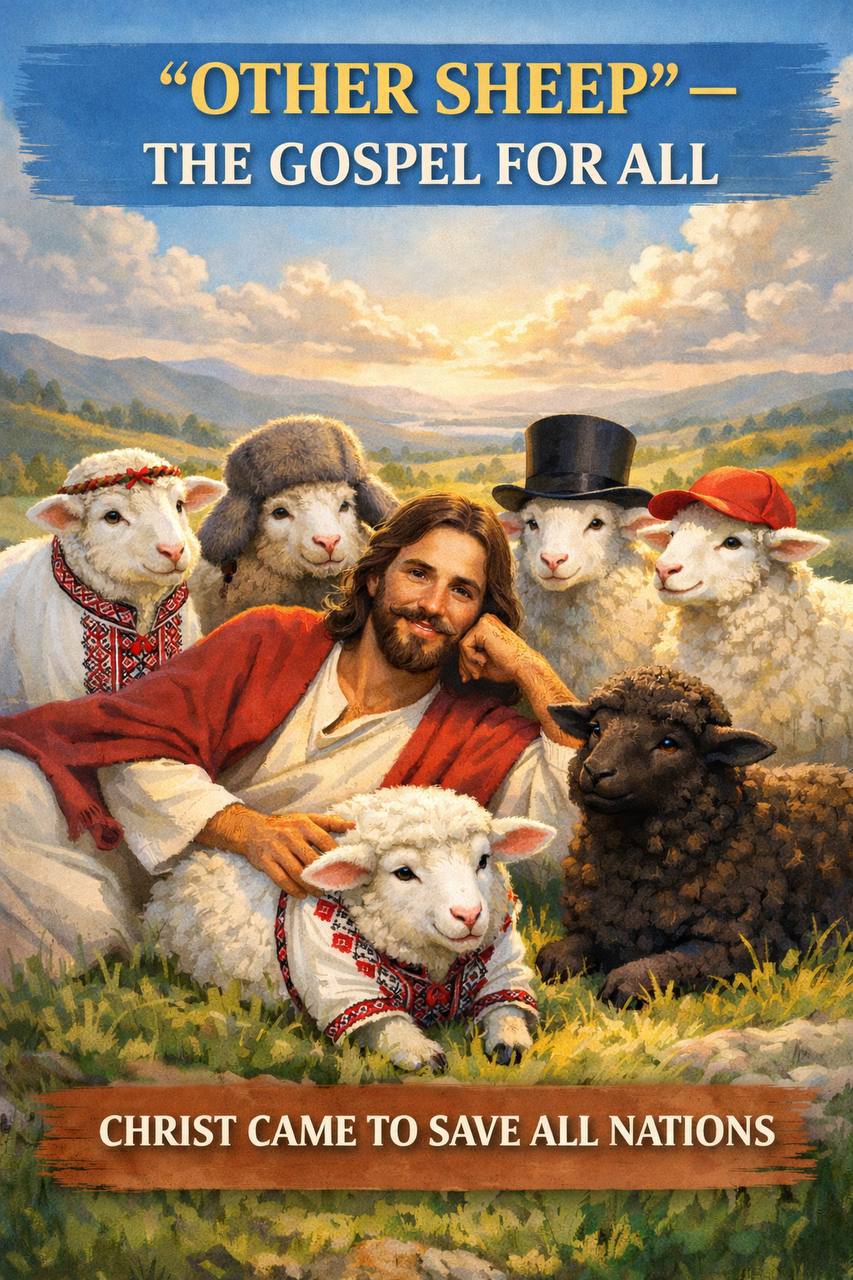
One Shepherd
 John 10:14–18
Scripture Passage
14. I am the good shepherd; and I know My own, and My own know Me,
15. just as the Father knows Me and I know the Father; and I lay down My life for the sheep.
16. And I have other sheep, which are not of this fold; I must bring them also, and they will hear My voice; and there will be one flock and one Shepherd.
17. For this reason the Father loves Me, because I lay down My life so that I may take it again.
18. No one has taken it away from Me, but I lay it down on My own initiative. I have authority to lay it down, and I have authority to take it up again. This commandment I received from My Father.
 “One Shepherd” — not an image, but a claim
The phrase “one Shepherd” is not poetic language about care; it is a theological claim. In the same discourse Jesus also says:
• “I am the door” (John 10:9)
• “If anyone enters through Me, he will be saved”
 one entrance, one Shepherd, one way to life.
 Prophetic foundation: Ezekiel 34
Ezekiel 34 is the key to understanding Jesus’ words.
God confronts the shepherds of Israel who:
• fed themselves instead of the flock,
• did not seek the lost,
• did not heal the injured.
Then comes a radical promise:
“Behold, I Myself will search for My sheep… I Myself will tend My sheep” (Ezek. 34:11, 15)
But God goes even further:
“I will set over them one shepherd, My servant David” (34:23)
This prophecy was given during the Babylonian exile, more than 400 years after King David. Therefore, it cannot refer to David himself, but to a future Messiah from David’s line.
The text holds a tension:
• Shepherd = the LORD Himself
• Shepherd = the Davidic Messiah
This tension is resolved only in Christ.
 Jesus and the conscious claim to the title
When Jesus says:
• “I am the good shepherd”
• “There will be one flock and one Shepherd”
He deliberately takes upon Himself:
• the role of Yahweh from Ezekiel 34,
• and the role of the Messiah from the house of David.
That is why the reaction of His listeners is so intense — they understand exactly which title He is claiming.
 “Other sheep” — the scope of God’s plan
“I have other sheep which are not of this fold…”
This is not about other congregations, but about other nations. The fold represents form, culture, and religious context. The sheep are people.
One flock does not mean one culture. One Shepherd means one source of salvation.
 The global picture today
Jesus’ words about “other sheep” are still being fulfilled in our time.
Bible translations
• 776 languages have a full Bible
• 1,798 languages have the New Testament
• 1,433 languages have individual books or portions
• In total, 4,007 languages of the world have at least part of Scripture
Many of the world’s languages still do not have a complete translation of Scripture, meaning millions of people cannot read God’s Word in their own native language.
 The missionary scope
According to mission research:
• there are about 16,382 people groups in the world,
• more than 7,100 of them are considered unreached,
• representing approximately 3.5 billion people.
These are not abstract numbers, but real people — the very “other sheep” Jesus spoke about.
 The Great Commission of the One Shepherd
After His resurrection, Jesus said: “Go therefore and make disciples of all nations…” (Matthew 28:19)
The Great Commission is a direct continuation of John 10:
• the Shepherd is one,
• the flock is one,
• but the gathering of the sheep is still ongoing.
We do not build our own flock. We participate in the work of the One Shepherd, who calls people from every nation.
 One-sentence conclusion
The One Shepherd—Christ—promised in Ezekiel, revealed in the Gospel, continues today to gather one flock from all nations through the proclamation of the Good News.