83. John 8:12-20 – Why Is Jesus the Light of the World?
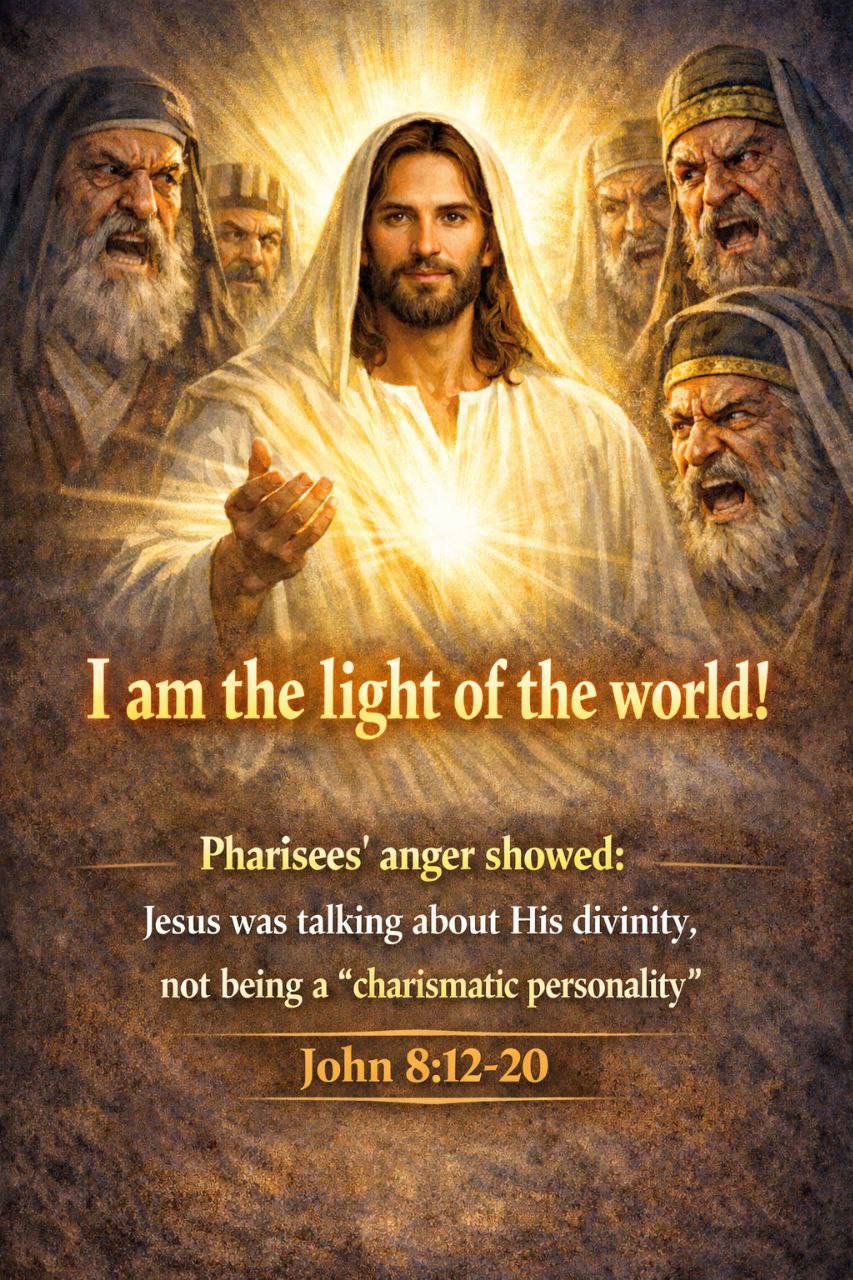
Why Is Jesus the Light of the World?
(John 8:12–20)
Biblical Passage
12. Then Jesus spoke to them again, saying, I am the light of the world. Whoever follows Me will not walk in darkness, but will have the light of life. 13. So the Pharisees said to Him, You are bearing witness about Yourself; Your testimony is not true. 14. Jesus answered, Even if I bear witness about Myself, My testimony is true, for I know where I came from and where I am going, but you do not know where I come from or where I am going. 15. You judge according to the flesh; I judge no one. 16. Yet even if I do judge, My judgment is true, for it is not I alone who judge, but I and the Father who sent Me. 17. In your Law it is written that the testimony of two people is true. 18. I am the one who bears witness about Myself, and the Father who sent Me bears witness about Me. 19. They said to Him therefore, Where is Your Father? Jesus answered, You know neither Me nor My Father. If you knew Me, you would know My Father also. 20. These words He spoke in the treasury, as He taught in the temple; but no one arrested Him, because His hour had not yet come.
Why These Words Provoked Anger
Jesus’ statement, “I am the light of the world,” immediately provoked a sharp reaction from the Pharisees. They did not discuss the beauty of the metaphor or ask Him to clarify its meaning. Instead, they accused Him of making an illegitimate claim about Himself.
If Jesus had merely meant that He was an inspiring teacher or a “bright personality,” such a reaction would not have followed. Israel had known many charismatic leaders and rabbis, yet none were accused of overstepping divine boundaries for that reason alone.
The anger of the Pharisees reveals that they heard something far more serious: a claim to divine identity.
Light in the Biblical Sense
In Scripture, light is not merely a symbol of goodness or knowledge. Light is directly connected to the nature of God Himself. The Lord is light and salvation; in Him there is no darkness at all; He dwells in unapproachable light.
When Jesus says, “I am the light of the world,” He is not claiming to point people toward God. He is declaring that He Himself is the source of light for the entire world.
That is what the Pharisees understood—and that is what offended them.
Why the Conflict Became So Intense
The Pharisees attempt to shift the discussion into a legal framework: “You are testifying about Yourself.” But Jesus does not retreat or soften His claim. Instead, He affirms that His testimony is true because His origin is heavenly and His mission is defined by the Father.
This is not a matter of self-opinion or personal confidence. It is divine self-revelation.
The Central Message
The reaction of the Pharisees becomes the key to understanding Jesus’ words. Their anger confirms that Jesus was not speaking about charisma, influence, or style, but about His divine nature.
His statement leaves no neutral ground.
Practical Application
• Jesus does not allow indifference
• He cannot be reduced to a “good teacher”
• Light cannot be neutralized: people either step into it or turn away
• The real question is not whether we like Jesus, but who we acknowledge Him to be
Conclusion
What angered the Pharisees was not how Jesus spoke, but who He claimed to be. He did not offer inspiration—He revealed His identity. of the world.Jesus is not merely a bright example. He is the Light of the world.