96. John 9:24-25 – What a Violation of the Third Commandment Looks Like
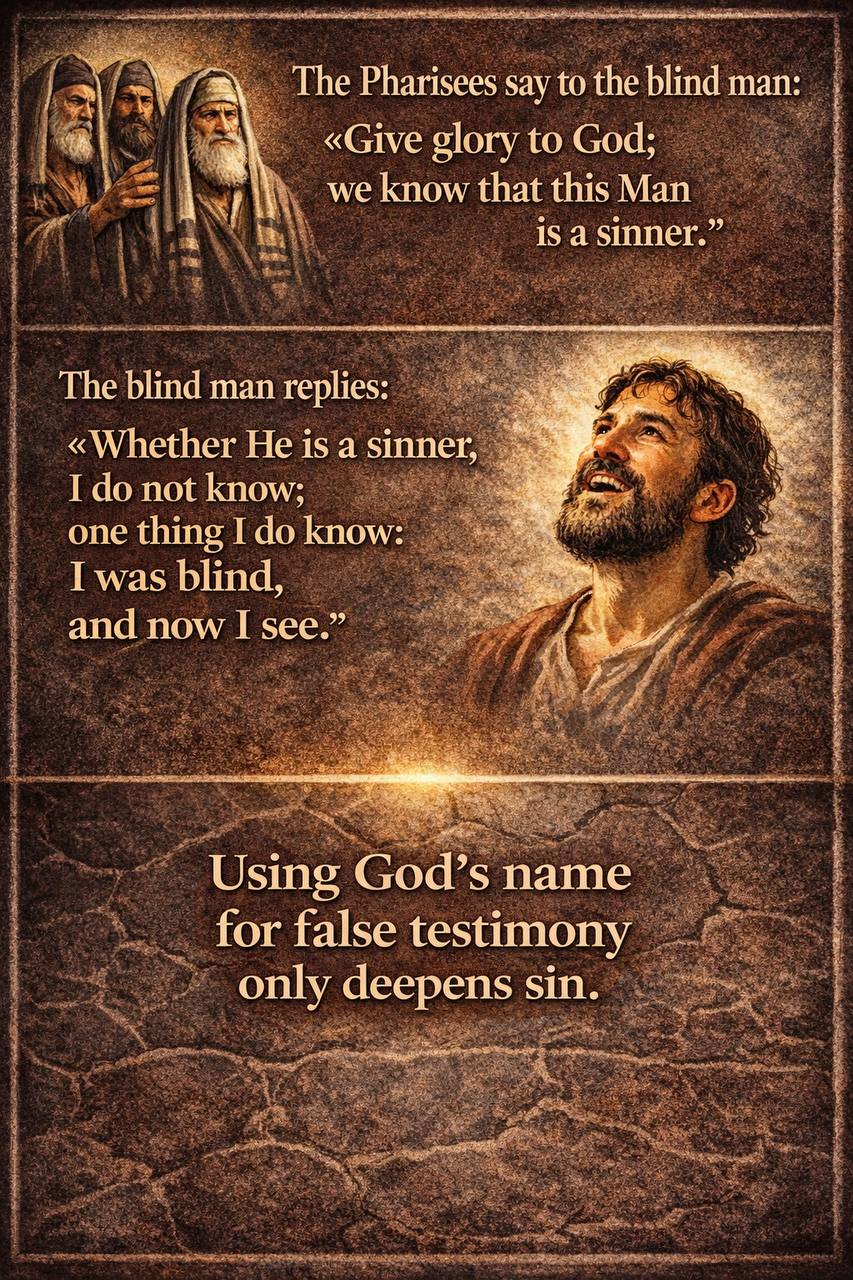
What a Violation of the Third Commandment Looks Like
( Spoiler: hiding behind God)
John 9:24–25
24. So for the second time they called the man who had been blind and said to him, “Give glory to God. We know that this Man is a sinner.”
25. He answered, “Whether He is a sinner, I do not know. One thing I know: that though I was blind, now I see.”
1. Why This Scene Matters
At first glance, the words of the Pharisees sound pious: “Give glory to God.” What could possibly be wrong with such a call?
Yet it is precisely here that one of the most dangerous forms of sin is revealed — a violation of the third commandment under the cover of piety.
2. The Third Commandment
In the list of the Ten Commandments, the third reads:
“You shall not take the name of the LORD your God in vain, for the LORD will not hold him guiltless who takes His name in vain.” (Exodus 20:7)
The third commandment is not merely about words. In biblical thought, God’s name represents His authority. To invoke God’s name is to claim: “God stands behind my words.”
Violating the third commandment means using God’s name falsely, drawing Him into one’s own conclusions, accusations, or pressure on others.
3. “Give Glory to God” as a Form of Violation
The Pharisees appeal to God as the highest authority, assert a predetermined conclusion — “we know that this Man is a sinner” — and demand that the formerly blind man confirm it. In effect, they are not saying, “Tell the truth,” but rather: “Confirm our version by appealing to God.”
This is false testimony wrapped a piety, a classic example of violating the third commandment.
4. The Blind Man’s Answer — A Refusal to Violate the Third Commandment
The healed man’s answer is simple and precise:
“One thing I know, that though I was blind, now I see.”
He does not enter into a theological debate. He does not hide behind religious formulas. He refuses to drag God into a lie.
He had been physically blind, but not blind enough to miss the trap.
5. Why This Topic Is Still Relevant Today
Violations of the third commandment most often appear not as blasphemy, but as phrases such as:
• “God is against you”
• “God told me” — without Scripture or fruit •
“For God’s sake, do this…” — as a form of pressure
• “We know that God thinks this way”
This is the same mechanism we see in John 9: using God as cover to legitimize one’s own position.
6. Conclusion
The third commandment was given not because God fears extra words, but because human beings are inclined to use God to justify lies.
John 9:24–25 makes this unmistakably clear: religion speaks in God’s name, while truth is spoken by a person who simply refuses to lie.